Keeping the Reader in the Story–Advice from Susan Elizabeth Phillips at RWA 2011
I had to go to France to find an English Garden
I just came back from the family vacation of a lifetime and wanted to share this with you…and then I promise, I will stop talking about gardens!
We went to France, even though, alas, I of course wanted to go to England. But with two teens who have taken years of French, France won out. (That’s okay, some day it will be Regency England tour without the teens!)
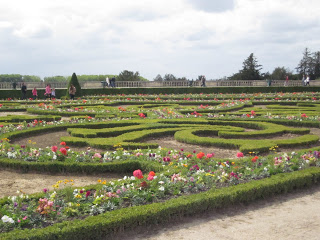
Below is a picture of the very French gardens at the palace of Versailles, outside of Paris. Notice the geometrical lines, the regularity imposed on the disorder of nature, which indicted how the king had the power to impose his will on his vast kingdom. (The source on this is here, a PBS link, but the picture is mine.)
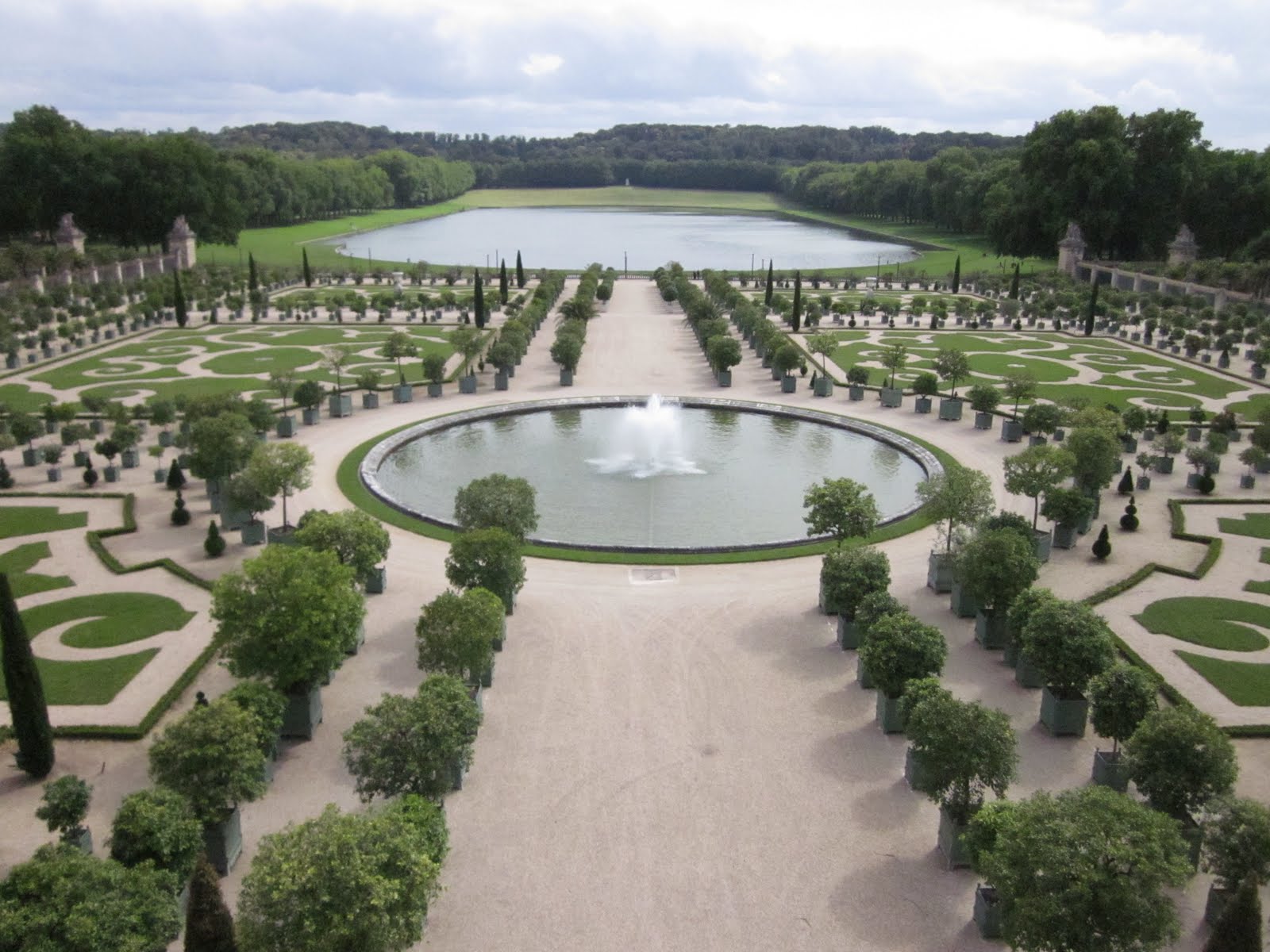
The long sight lines are a metaphor for the king’s power, which extends in all directions, as far as the eye can see.
But just around the corner (okay, these gardens are pretty vast, so farther than that) is Marie Antoinette’s Hamlet (the “Hameau de la Reine”) which was her private retreat in the park of the palace built around 1785-92. This retreat was complete with rustic buildings and was a real working farm. It has a pond and a windmill and various little buildings. But the best part, at least for me, is that it has an English garden!
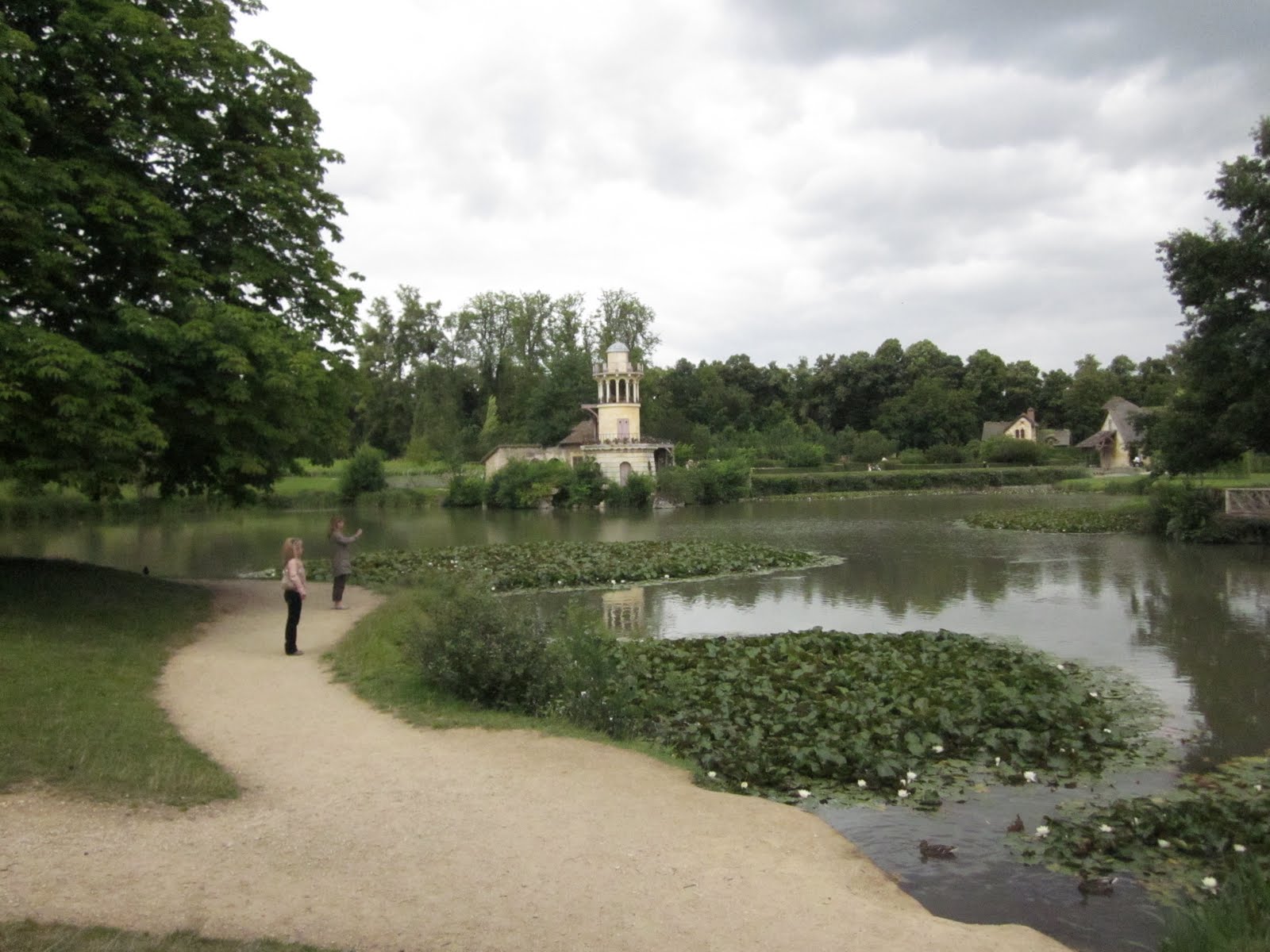
Notice the meandering gravel paths that wind around the sights,
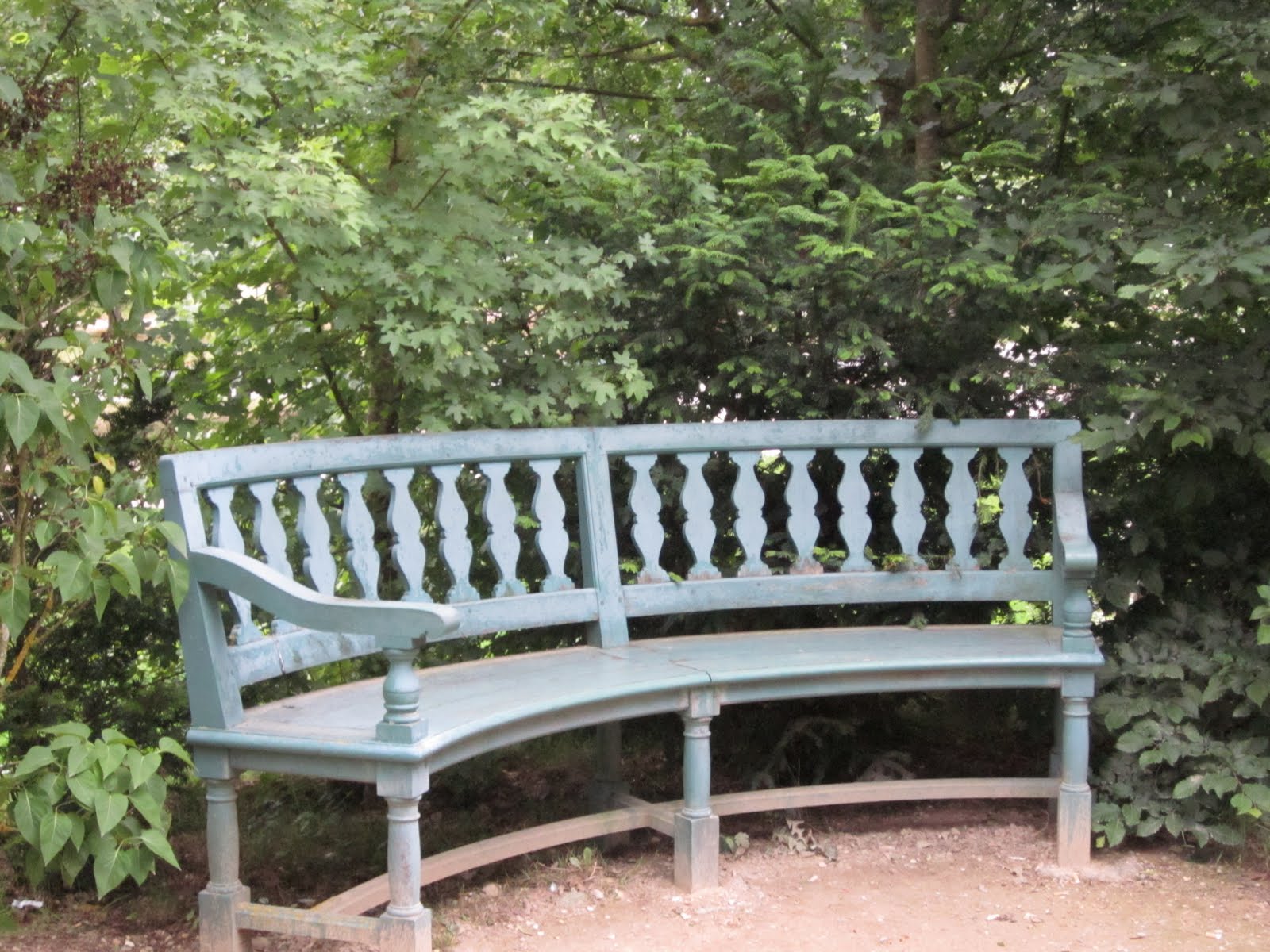
the benches that offer a place to admire the view or to reflect on the scenery…
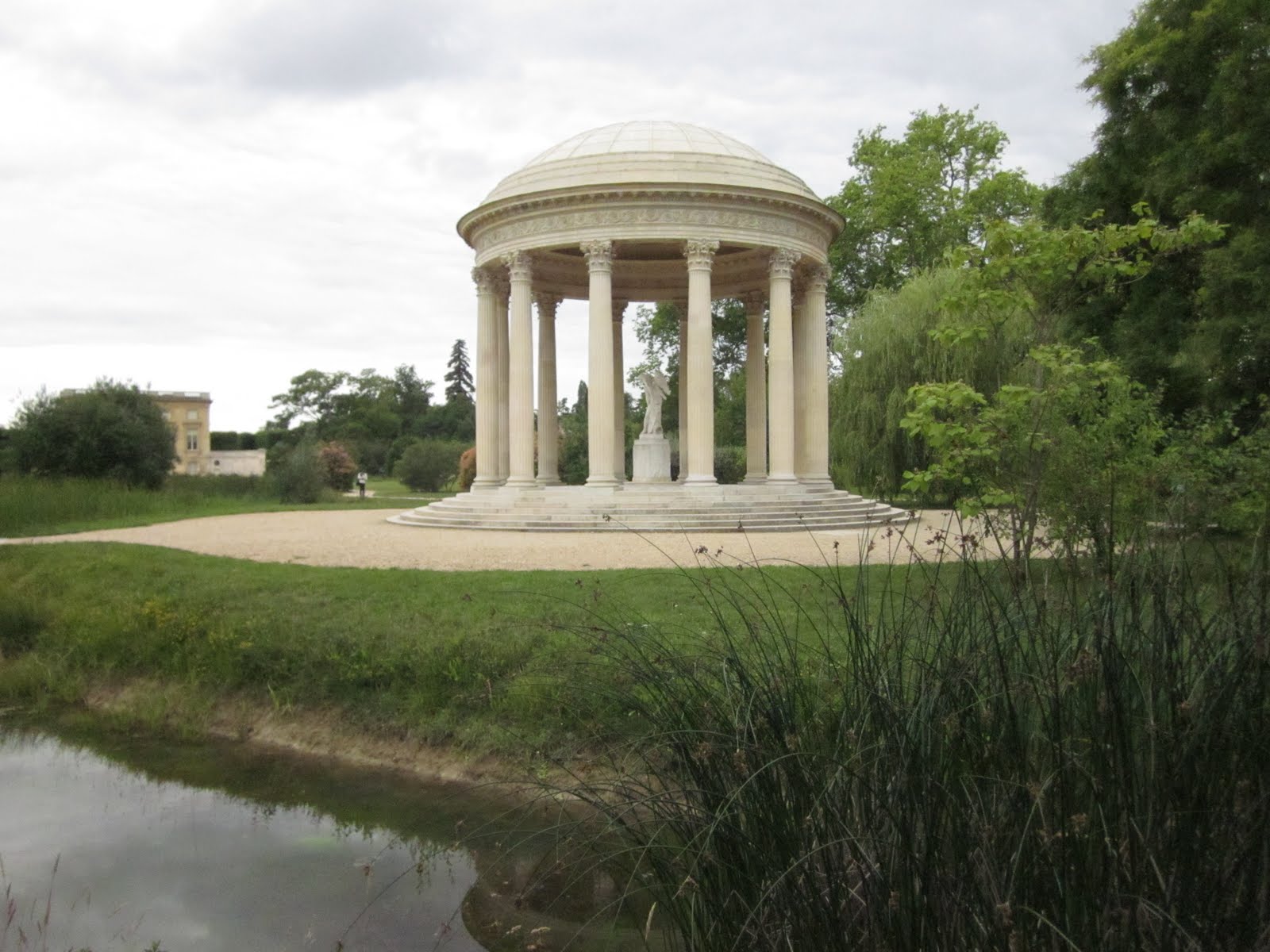
And here’s the requisite folly–the classical Temple of Love, with Cupid in the middle.
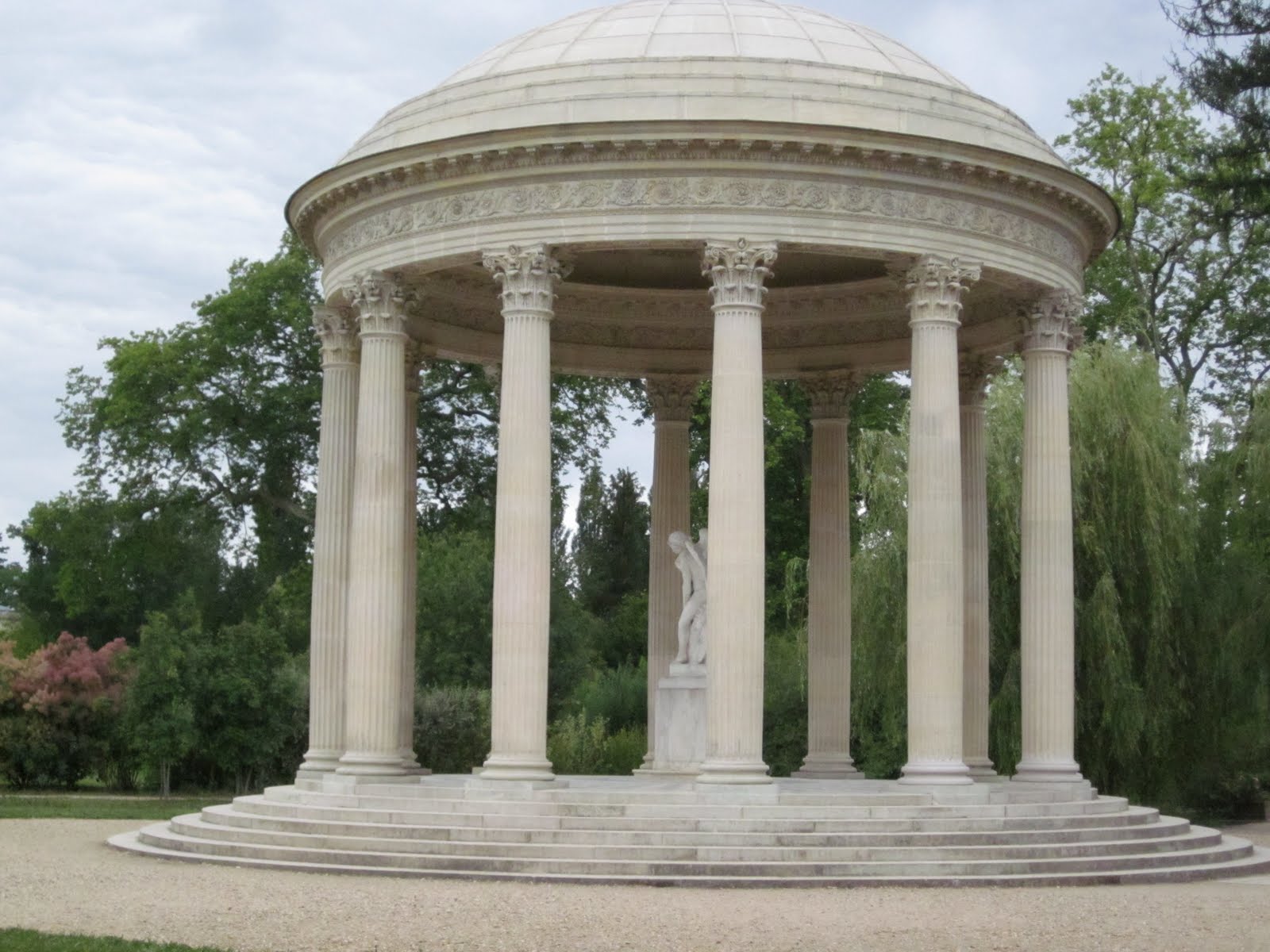
From far away, it looked really small.
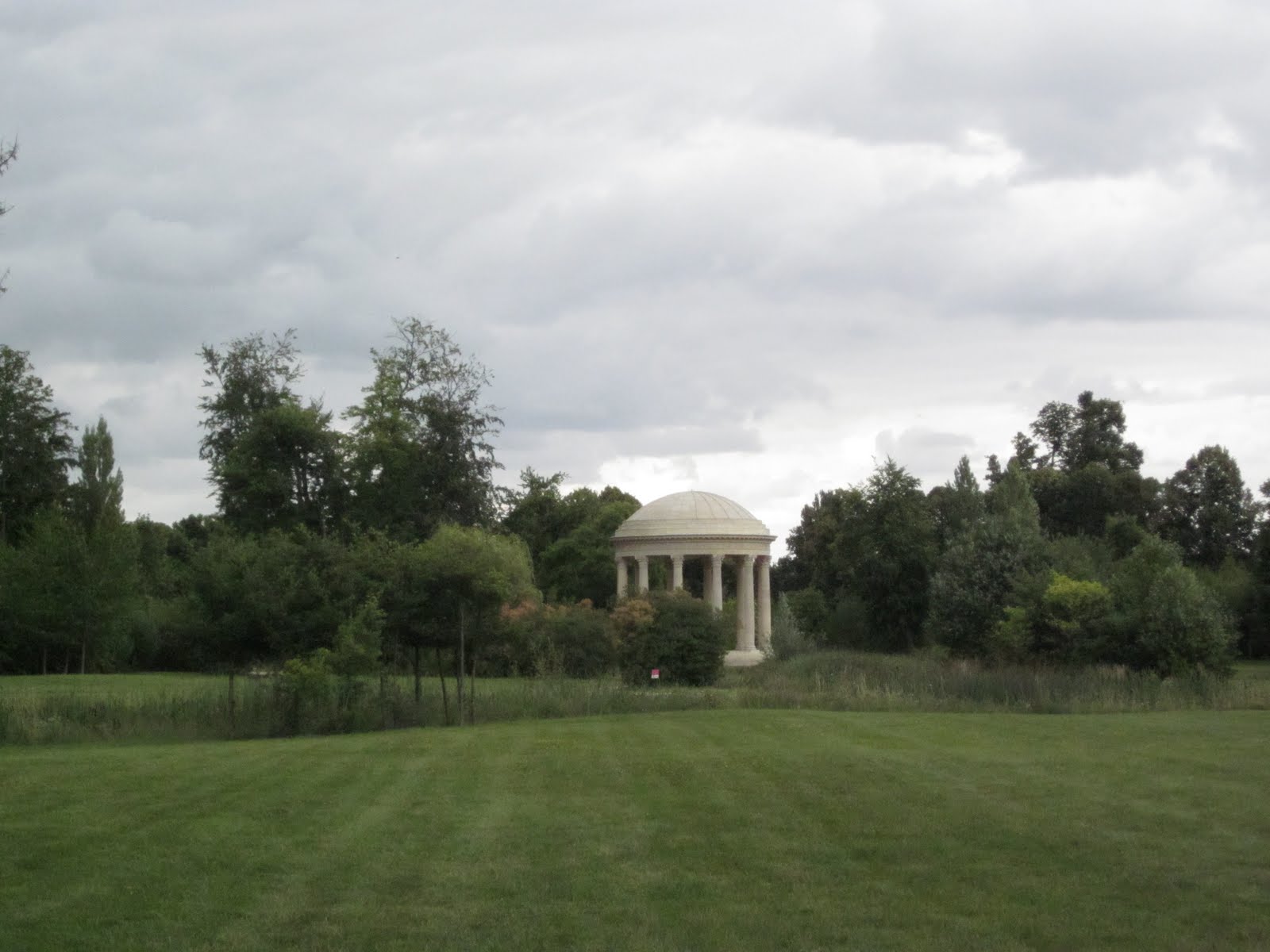
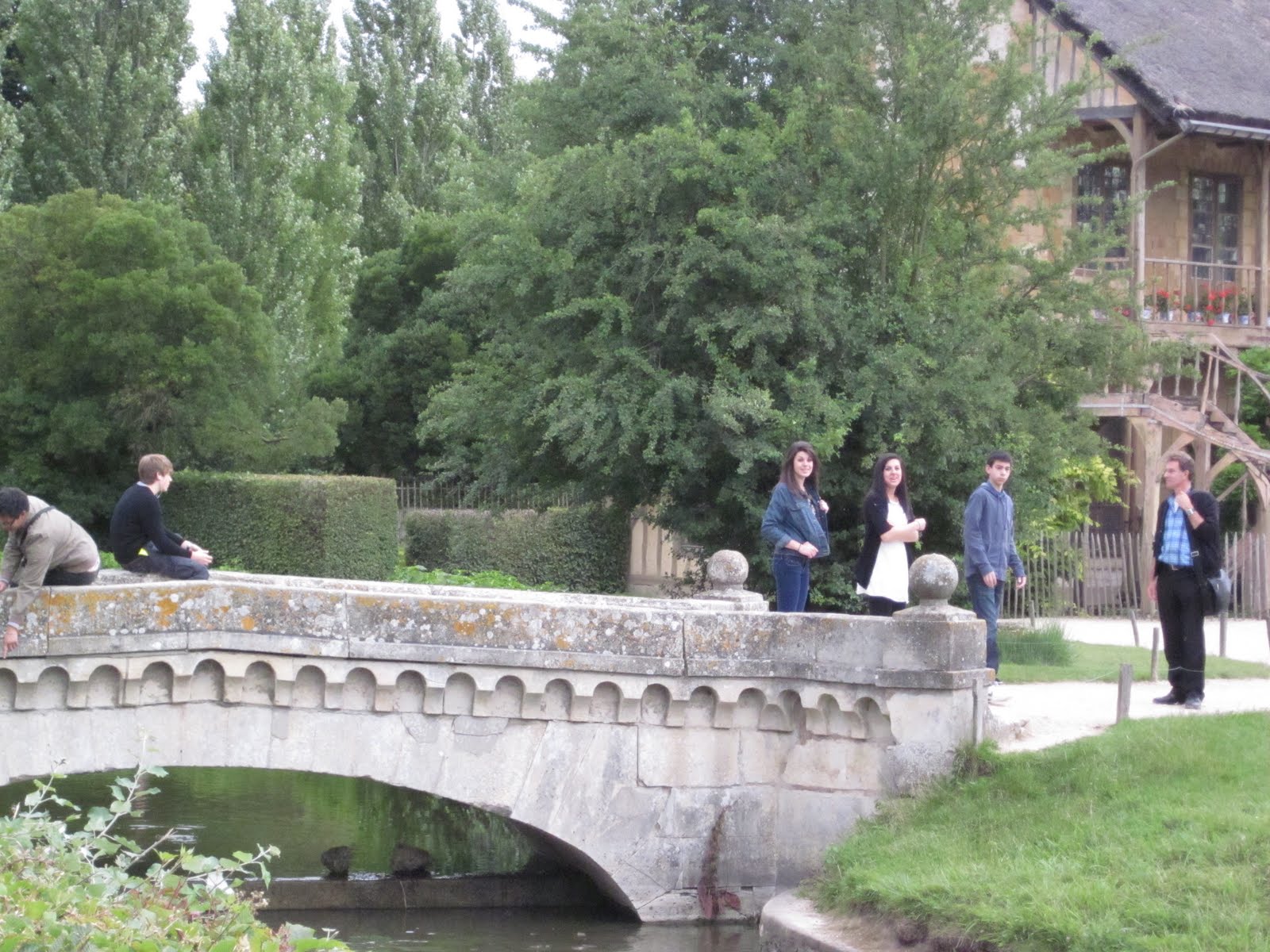
Here are some shady characters crossing a little bridge.
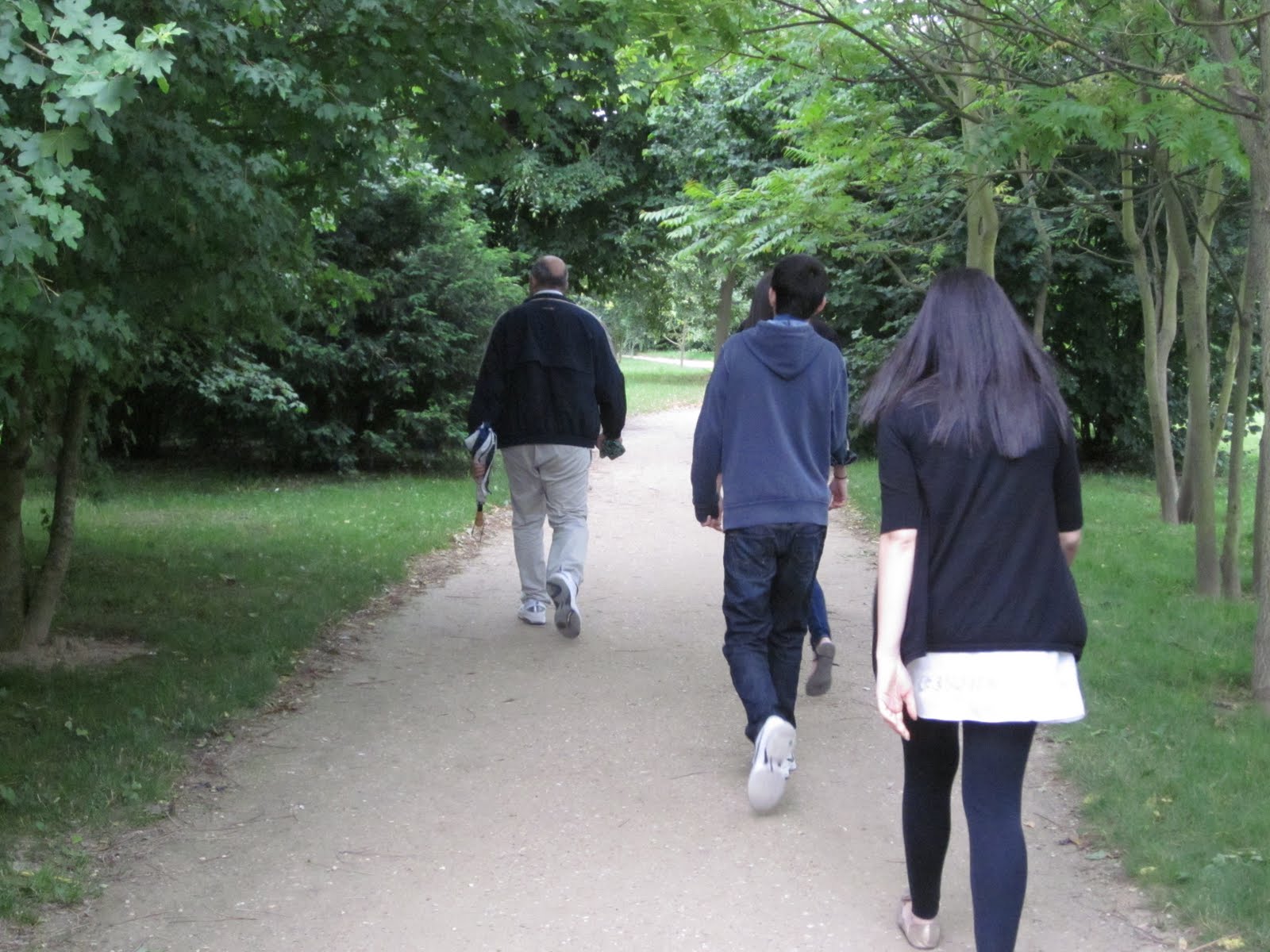
The paths, just as in Jane Austen’s day, were quite wide, condusive to talking and walking.
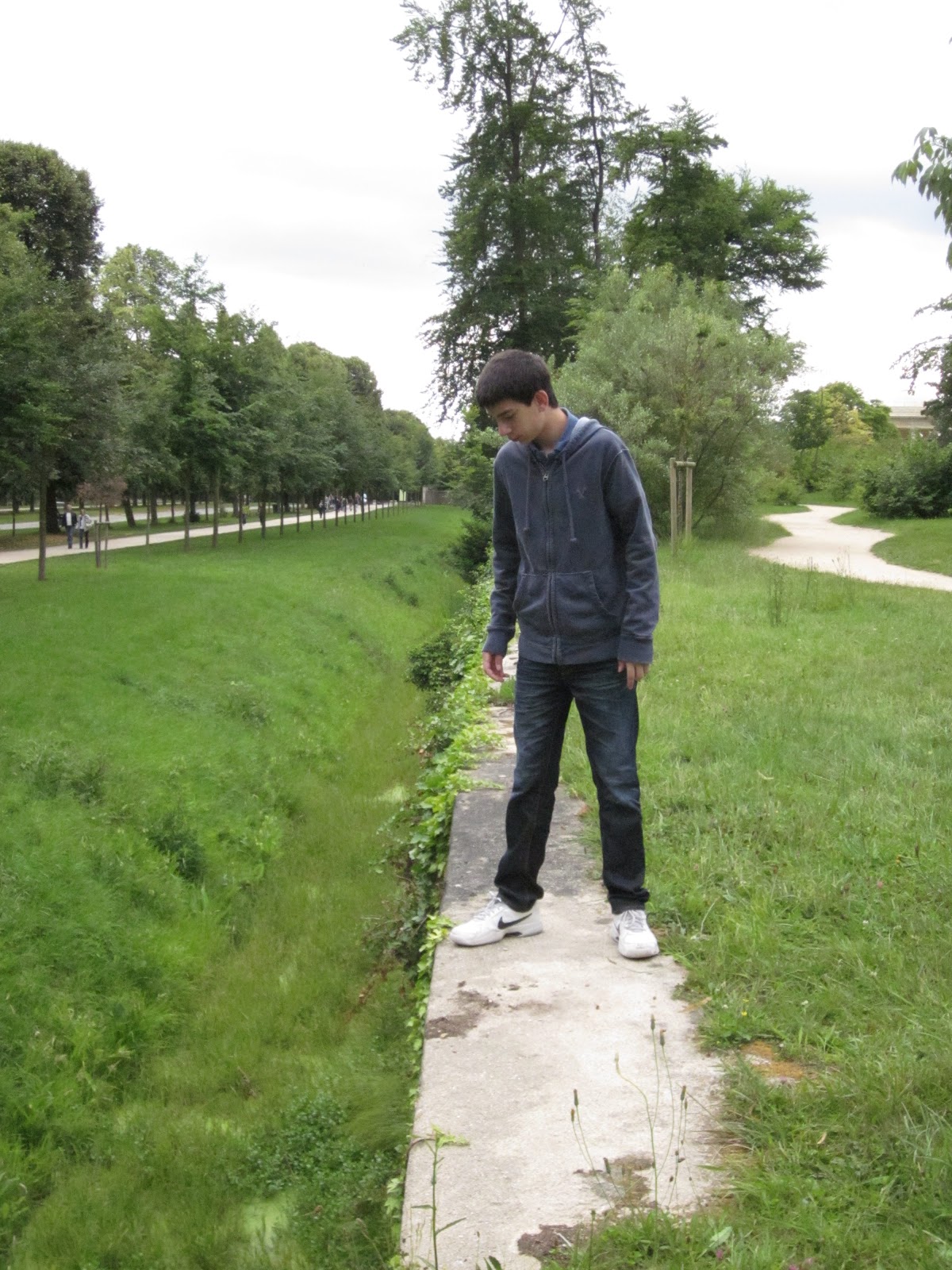
But the best part of all was the ha-ha wall. (Another shady character standing atop that!)
So you can really tell a difference between the winding paths and broken vistas of the English garden vs. the linearity and expansiveness of the French one. Voila!
Next stop for me is RWA Nationals! See you all there!
In the Garden with Jane Austen: Part 2, The Shrubbery

The English garden was built to be experienced by walking through it and discovering surprising elements–vistas, benches, follies, grottoes, etc.

Garden path in a Regency shrubbery.
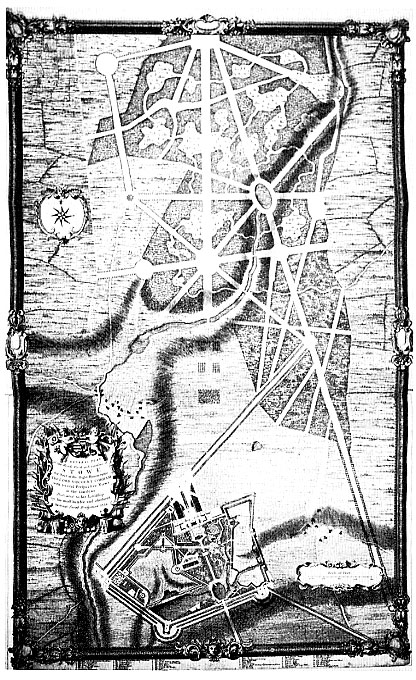
Look how extensive the original plan of Stowe Garden (Buckinghamshire, England) was in 1739.
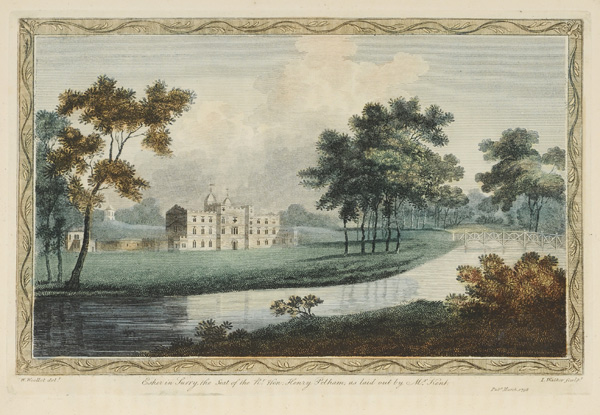
This is a color plate from a book called Observations on Modern Gardening, and Laying Out Pleasure-Grounds, Parks, Ridings, etc. by Horace, Earl of Orford, and ornamented with plates chiefly designed by Mr. Wollet.

This is a German estate (Rastatt Favorite Palace) but it has an English garden.

Stowe Gardens, designed by William Kent.

Two more of Stowe, above and below.

A shrubbery could be open, i.e., planted on one side, or closed, (on both). Of course, the closed kind is far more beneficial for everything secretive your heroine must do on her socially acceptable walk, since the shrubbery will give her ample opportunity to get as close to your hero as you’d like.

This is a watercolor of Sheringham Hall in Norfolk, designed by the premier landscaper of 18th century England, Sir Humphrey Repton (1752-1818). He considered the landscaping of this estate his finest work.
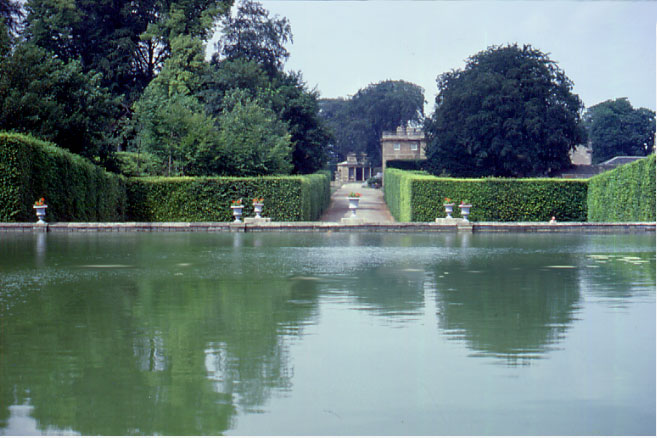
This is Bramham Park, Yorkshire. The picture shows an example of the English Forest style from the early 1700’s, with avenues and extensive plantings of forest trees.
So there you have it, and not a weed in sight. 🙂
In the Garden with Jane Austen: Privies and Ha-Ha Walls
At last, spring has hit Northern Ohio. Well, actually, I think we skipped spring and went right into summer. Believe it or not, today the temp here (90-ish) is going to be hotter than Miami, FL!
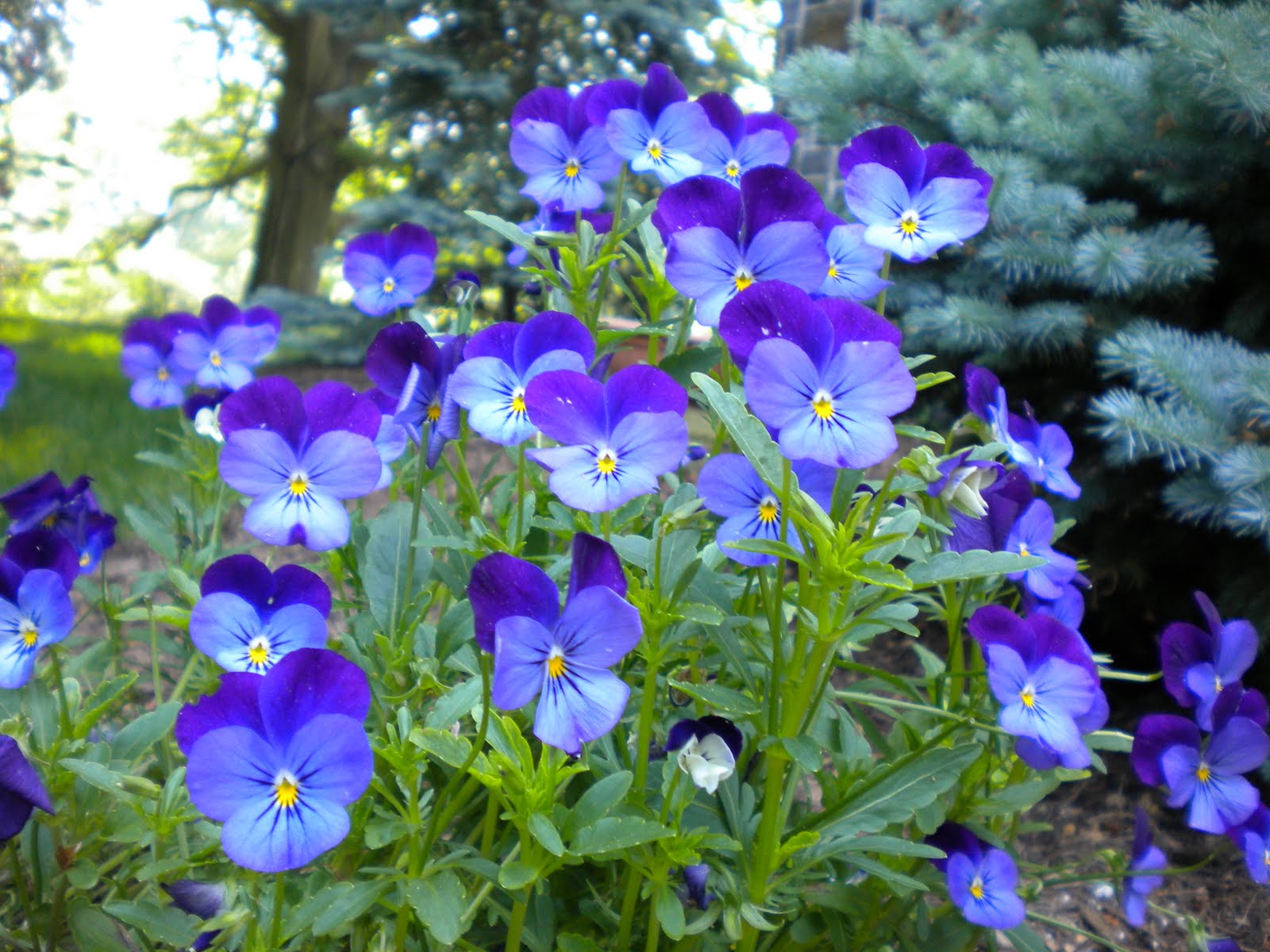
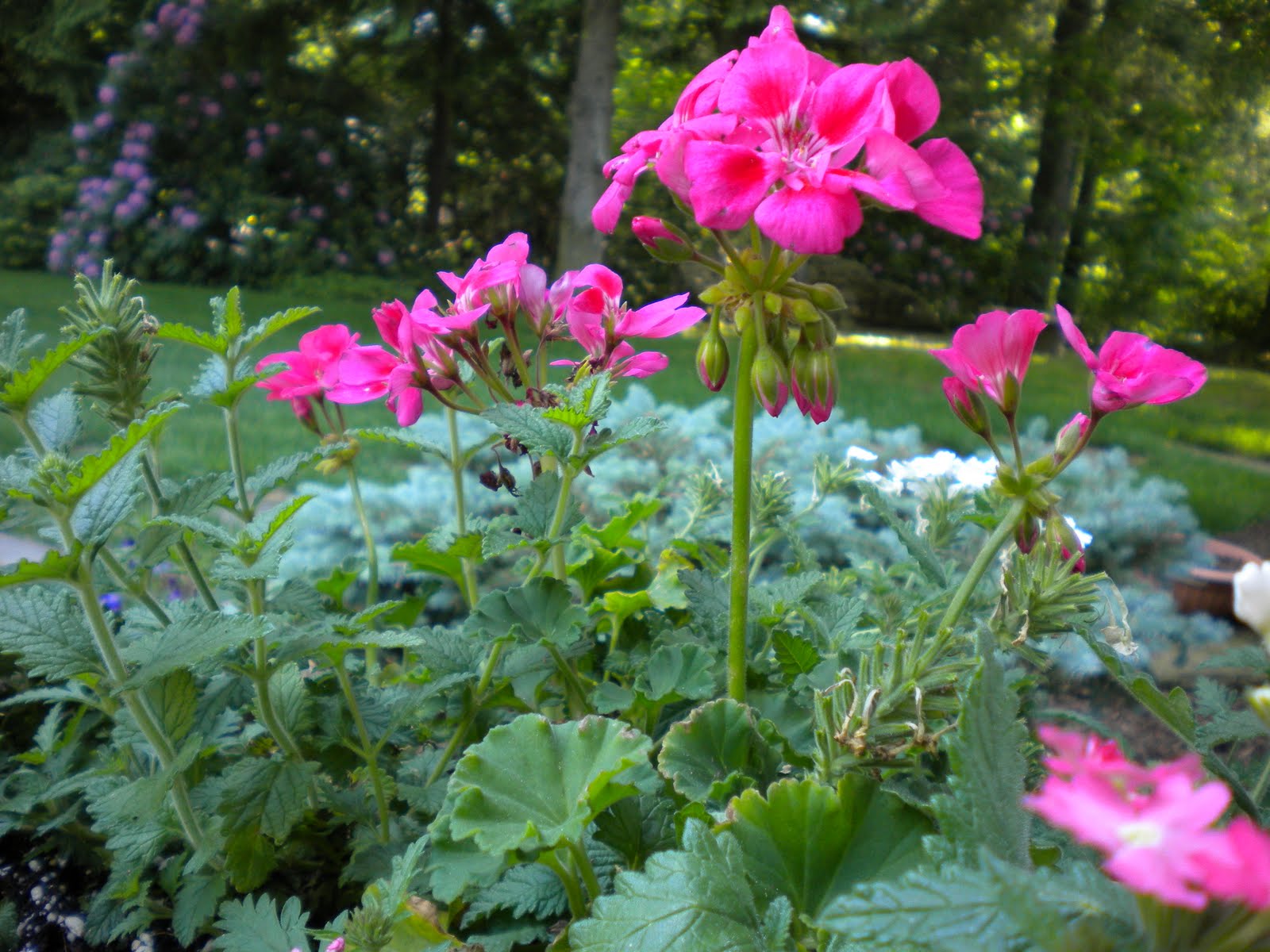
Okay, those were some shots from my garden. I love flowers!
I’d like to share some things I learned from a beautiful book called In the Garden with Jane Austen by Kim Wilson. This book is essentially a stroll through the kinds of gardens Jane would have known and visited–from cottage gardens, town gardens, public gardens and parks, to gardens of the great estates. It is peppered wtih beautiful photographs, period drawings, biographical information, and exerpts from Jane’s novels and letters. Clearly, the author recognized Jane’s love of gardens, and marries that to all sorts of wonderful details about the Regency period. Here are just a few fascinating facts I learned. Keep them in mind, Regency writers (or just enjoy them, everyone else):
–“Plucking a rose” meant visiting the privy. (Can you imagine using this expression in your next Regency novel?) Why? Because the “conveniency” or “necessary house” was often located in the very back of the garden (as far away from the house as possible!), so you had to pass by all the flowers to get there. (Might as well pick a few on your way, I reckon.)
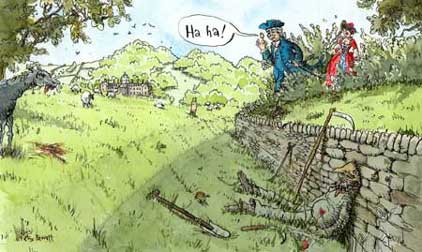
–On a great estate, the main pleasure grounds of the house (decoratively planted areas, walks, shrubberies, lawns, gardens, conservatories, hothouses, and temples) were separated from the park (the grounds reserved for timber, deer, cattle and sheep) by a hidden wall called a ha-ha. (Supposedly it was named for the expression of surprise one would utter when accidentally coming upon this drop-off as one was walking around). This clever structure (often made of stone) preserved the view from the house but also created a barrier to keep the livestock off the beautiful main lawn.
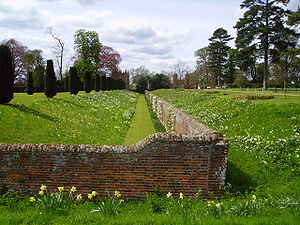
I had read of ha-ha walls before, but the way they were described, could never picture them. Wilson’s book has a perfect picture of one that is instantly understandable.
You can read more about ha-ha walls here and you can see one below. This pic doesn’t really do it justice–the top of the wall should be level with the grass–so the wall is essentially hidden from view. If, for example, you are standing in front of a grand estate looking out over the lawn, you would not see the wall at all.
This is a rather gruesome cartoon (taken from the BBC link above), but it illustrates this hidden wall idea a lot better, IMO:
These interesting but obscure facts don’t by any means do this book justice–it’s loaded with rich, beautiful pictures of gardens in various settings.
Next post, I’m going to describe exactly what a shrubbery is–and why your heroine is likely to do something illusive, secretive, or even downright shocking in one!
Enjoy the weather!
Deep POV Tips from Author Jules Bennett
- Before you begin writing, imagine yourself in your scene. Specifically ask yourself, what am I seeing? What am I smelling? Take a virtual look around and experience the scene through your senses.
- Strive to put an emotional up-and-down in each scene. Just as a scene has a beginning, middle, and an end, so it must also have emotional ups and downs.
- Who’s head to write in? We’ve all heard that we should write the scene from the POV of the character with the most to lose. If you’re having trouble deciding that, jot down a paragraph or two in the heroine’s POV and another paragraph or two in the hero’s, then decide which is most effective.
- To get deep into the minds of your characters, do a quick, five-minute journal entry pretending you are that character. The question you are answering is: how would you feel if this happened in your life? Jules said don’t get carried away with it, do it quickly and briefly and get back to writing.
- Setting often makes a big difference in how the characters act and feel. It needs to come alive, as well as the characters. Jules shared a tip that everyone loved—when she researches different places, she often calls realty agents in the area to ask details like, what are the popular attractions, how do people dress, what are the nightclubs like? Having set a book in Miami, Jules was very honored when her editor, who had family living in Miami, said she wrote as if she had lived there herself (despite the fact that she had never been there).
- You can use your own mood to help your writing. Once she has her rough draft down, Jules hops around when revising depending on her mood. So she tries to channel her current mood, good or bad, into her writing.
- Openings need to be packed with a punch, so work hard on them. A tip from Leanne Banks: before you start a new manuscript, really quickly, list 20 things you want to happen in your book. This is a creative way to explore and focus on what you really want to write about.
- When asked about her process, Jules says she begins with one scene in her head and then keeps asking what if? over and over.